
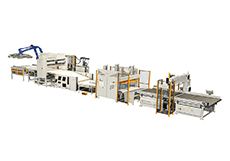
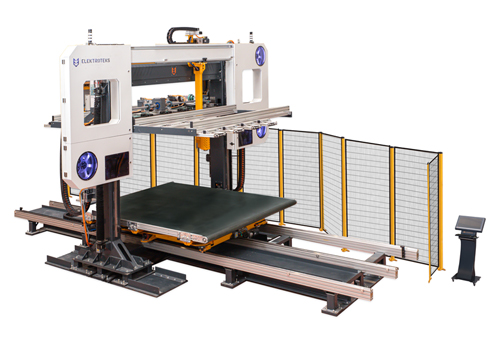


How to Set Up a Mattress Production Line: Stages and Machines
Which stages make up a mattress production line, which machine works at each stage, and what should you consider when planning one?
Mattress manufacturing depends on several separate operations feeding one another in the right order and at the right pace. However high the capacity of a single machine, the slowest stage sets the daily output of the line. This article walks through the stages of a mattress production line, the machines used at each stage, and the questions to ask when setting one up.
The mattress design defines the line
Before planning the line, be clear about the mattress types you will produce. The cores of innerspring (Bonnell or pocket spring), foam and hybrid mattresses go through different operations, while the quilted panel and the border that form the outer surface are common to all. The proportions in your product mix show how much capacity each station needs.
Mattress production step by step
1. Preparing the core
In innerspring mattresses the spring unit forms the core; in foam mattresses it is foam blocks cut to size. On the foam side, block cutting and contour cutting machines are used; see foam machines for details.
2. Gluing the layers
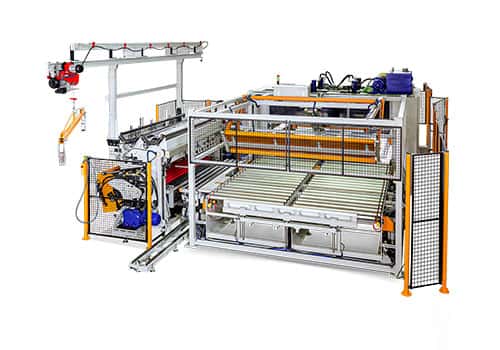
The core, comfort layers and edge support foams are joined on the gluing line. The type of adhesive and the application method affect both durability and line speed. The machines for this stage are listed under gluing machines.
3. Quilting
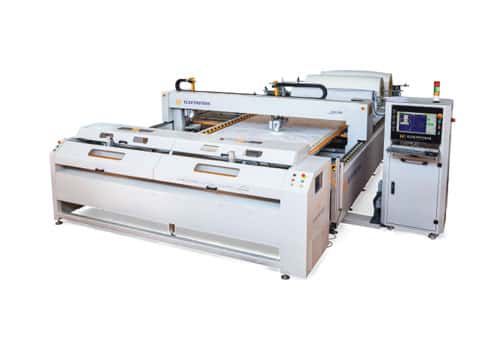
Fabric, fibre and foam layers are stitched together on the quilting machine to make the top and bottom panels. Pattern variety and speed requirements determine the machine type: quilting machines.
4. Panel cutting and edge finishing
The quilted roll is cut to mattress size on a panel cutter and the edges are finished with an overlock. Any dimensional deviation here is carried into every later stage.
5. Border preparation
The border that forms the side of the mattress is produced on a separate branch: border quilting, handles, ventilation and zipper sewing happen here. Related machines: border machines.
6. Tape edge closing
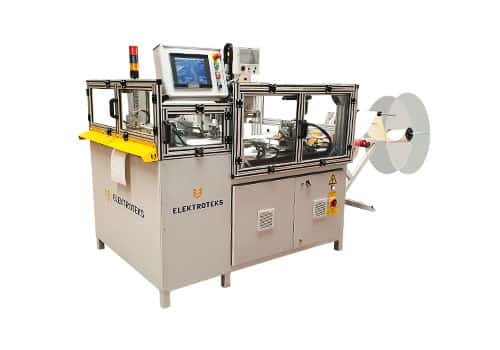
The panel and the border are joined with a tape on the tape edge machine. This is the seam that most affects how the finished mattress looks.
7. Inspection, packing and stacking
After final inspection the mattress is packed flat or rolled and prepared for shipment: packing machines.
Questions to ask when setting up a line
- What is the daily target? The output target per shift should be compared with the cycle time of each station.
- Where is the bottleneck? On most lines tape edge closing or quilting is the limiting stage; capacity is balanced around it.
- How often do products change? Lines with frequent model changes favour machines with short set-up times.
- How will material flow? Conveyors between stations, buffer areas and stacking should be planned from the start.
- Are space and utilities sufficient? Compressed air, power and floor load are verified before the machine layout is fixed.
Growing in steps
Layout: straight line or U-shaped line?
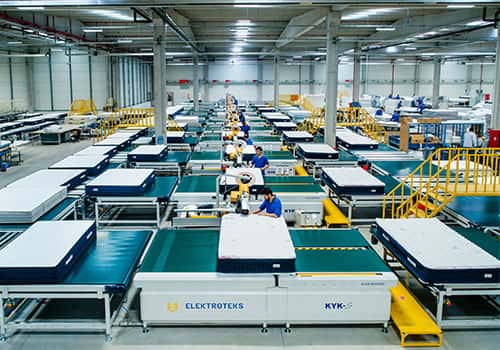
The machine layout determines the path material travels through the factory. In long, narrow buildings a straight line, with raw material entering at one end and finished product leaving at the other, is a natural solution. In square or short buildings a U-shaped layout brings entry and exit to the same side and reduces forklift traffic. Whichever shape is chosen, three rules do not change:
- The product should never travel backwards; the flow must be one-way.
- The panel and border branches should meet at the tape edge station by the shortest route.
- Feeding areas should be reserved at the side of the line for bulky raw materials such as fabric, foam and springs.
How is capacity balanced?
The time a station needs to process one mattress is its cycle time. The target rhythm of the line is found by dividing the shift time by the daily target. Stations whose cycle time is longer than this rhythm need either a second machine or a faster solution. Conversely, investing in a station that already runs much faster than the rhythm does not increase line output. The calculation should be repeated for the slowest product in the mix; high, multi-layer mattresses take longer at most stations.
Commissioning and training
Getting the machines to the factory is half the job. During commissioning each station is tested first on its own and then as part of the whole line; trial production should use real products and real materials. Training for operators and the maintenance team, a list of spare and wear parts, and a support plan for the first months should be part of the contract.
Frequently asked questions
Which machine should a small manufacturer start with?
In most cases quilting and tape edge closing are the first investments, because these two stages determine the look of the mattress and the daily quantity most. Packing and gluing are automated as volume grows.
Can existing machines be used in the new line?
Yes. In a step-by-step transition existing machines can be kept while the bottleneck station is renewed; what matters is that conveyor heights and flow direction match.
Which mattress sizes should the line be designed for?
The largest size and the highest mattress thickness to be produced define the working range of the machines; sizes expected to be added later should also be taken into account.
You do not have to automate the whole line at once. Many manufacturers first strengthen the bottleneck stage and then link the stations with conveyors. In such a transition, how well the machines work together determines the efficiency of every link added later. To see all the stages together, visit mattress machines.
- mattress production line
- mattress machinery
- mattress manufacturing
- production planning
