


Automation in Mattress Production: How to Increase Line Efficiency
Bottleneck analysis, conveyors and buffers, stacking and robots: where to start with automation in mattress production and how to measure efficiency.
A mattress is a bulky, heavy product; in production a significant share of time is spent not on sewing or gluing but on moving the product from one station to another, flipping it and letting it wait. The first gain from automation usually comes from here. This article looks at where to start with automation in mattress production and how to measure the result.
Measure first: where is the bottleneck?
The slowest station sets the output of a line. If the automation investment goes into a station that is not the bottleneck, daily output does not change; only the intermediate stock grows. So the first step is to record the cycle time, stoppages and queue in front of each station over several days.
Four layers of automation
1. Transport: conveyors
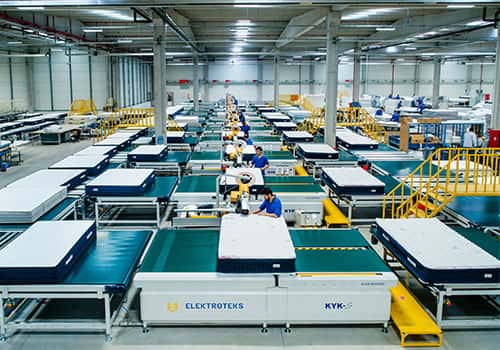
Linking stations with conveyors removes manual carrying and makes the rhythm of the line visible. Turning, lifting and transfer units adapt the line to the factory layout.
2. Balancing: buffers
Station speeds are never exactly the same. Buffer areas placed between them prevent a short stop at one station from stopping the whole line.
3. Handling: flipping, stacking and robots
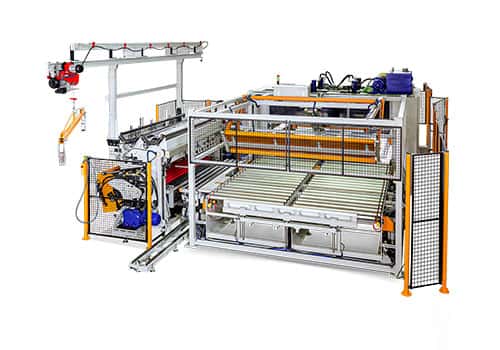
Flipping the mattress, placing layers and stacking the finished product are physically the most demanding jobs. Flipping units, stackers and robots take these over; safety and continuity improve together.
4. Information: monitoring and data
Output counts, stoppage reasons and cycle times collected from the machines mean decisions rest on measurement rather than estimates. In make-to-order production, knowing which mattress is where on the line also matters.
How is efficiency measured?
- Availability: For how much of the planned time did the line actually run?
- Performance: While running, how close did it get to the target speed?
- Quality: How many of the mattresses produced were accepted first time?
The product of these three ratios is known as overall equipment effectiveness (OEE). Looking at which component is low is more useful than the single number.
A step-by-step roadmap
- Measure the existing line and identify the bottleneck.
- Strengthen or duplicate the bottleneck station.
- Link the stations with conveyors and define buffer areas.
- Automate the end of the line (packing and stacking).
- Introduce data collection and monitoring; repeat the measurement.
Common mistakes
- Focusing on a single machine: A fast machine runs below its capacity if the stations before and after it cannot keep up.
- Ignoring product variety: The line should be designed for the product mix, not for the best-selling model alone.
- Not planning maintenance: On an automated line one stoppage affects the whole line; a preventive maintenance schedule is part of the investment.
- Skipping operator training: Automation does not remove the operator's job; it changes it.
Automation in make-to-order production
Many mattress manufacturers produce to order rather than to stock: products of different sizes, fabrics and firmness pass through the line on the same day. In such production the job of automation is not only speed but making sure the right parts meet in the right mattress. Tracking with a barcode or label that the panel, border and core belong to the same order prevents mismatches at the tape edge station. Machines that take order information from the production plan and adjust to size by themselves reduce the time lost at model changes.
Maintenance: the insurance of an automated line
In a manual workshop, when one machine stops, work can be shifted to another bench; on a linked line a single stoppage cuts the whole flow. Preventive maintenance is therefore an inseparable part of automation:
- Daily cleaning and visual checks are the operator's job.
- Weekly and monthly maintenance steps are tied to a schedule.
- Critical spare parts are kept at the factory.
- Stoppage reasons are recorded; recurring faults are eliminated at the root cause.
Remote fault diagnosis lets supplier support begin before anyone travels to the factory and shortens downtime.
Evaluating return on investment
The return from automation is not measured by labour savings alone. More output from the same floor area, less waste and rework, shorter delivery times, fewer accidents and lower dependence on trained operators should also be counted. A sound evaluation requires the situation before the investment to have been measured; without "before" data there is nothing to compare "after" with.
Frequently asked questions
Does automation make sense for small manufacturers too?
Yes, in steps that match their scale. A conveyor between stations or a stacker at the end of the line is a much smaller investment than a fully automatic line and reduces handling straight away.
Can machines from different brands work on the same line?
Mechanically, conveyor heights and speeds must match; on the control side, the signal exchange between machines must be compatible. This should be clarified at the project stage.
What are robots used for?
Placing layers, applying adhesive, stacking and palletising are the most common areas; repetitive, heavy jobs that need precise positioning suit robots best.
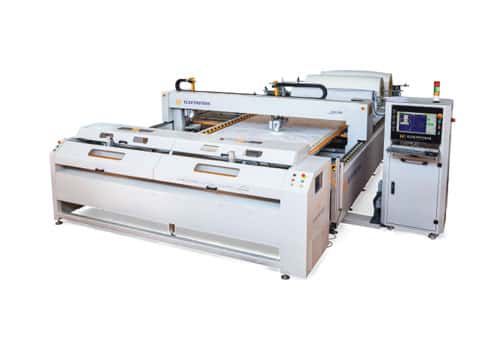
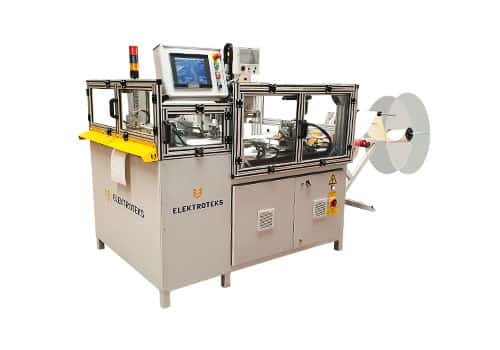
You can review the line components on the mattress machines and packing machines pages.
- mattress production automation
- line efficiency
- conveyors
- stacking
- bottleneck analysis
